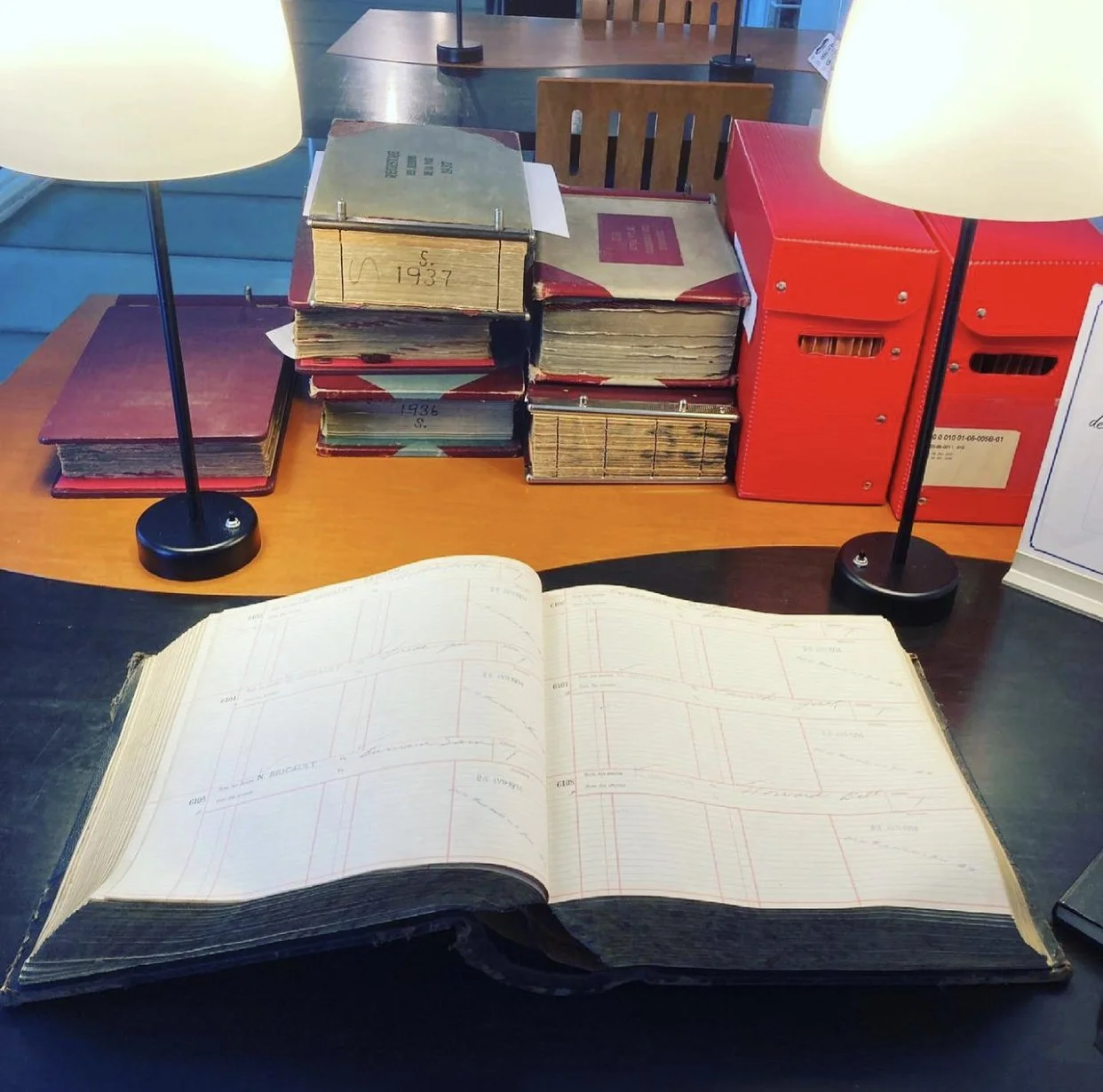
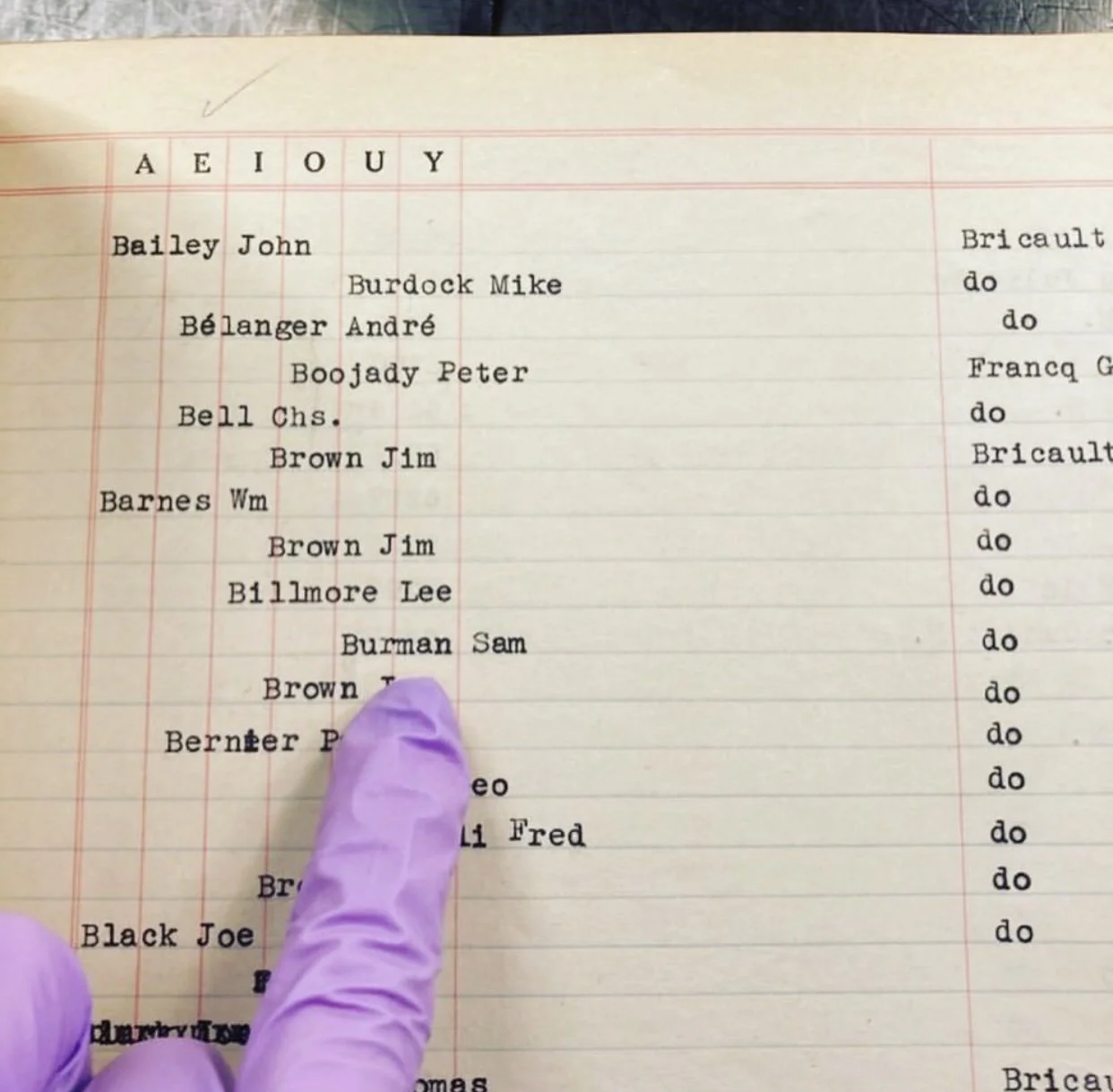
William DeBozy, an American who was arrested in January 1938 in Windsor, and later sentenced to three years jail.
by Dave Dormer
George Charbonneau likely had no idea RCMP Sgt. Ted Weeks was waiting for him when he boarded the LaSalle Ferry on Dec. 4, 1937 for the 15-minute return trip from Detroit to Windsor, Ont.
In the pockets of his overcoat on that chilly Saturday, the 21-year-old Canadian was carrying just over five ounces of ground cannabis hidden in two tobacco tins.
Reefer Madness was ramping up as cannabis had been made illegal in the U.S. two months earlier (14 years after it was made illegal in Canada) and enforcement was increasing on both sides of the border.
According to a 1938 League of Nations report on illicit transactions and seizures of drugs, RCMP suspected Charbonneau of trafficking cannabis and Weeks, along with Const. Robinson of the Windsor detachment, were waiting to search him when he arrived at the dock.
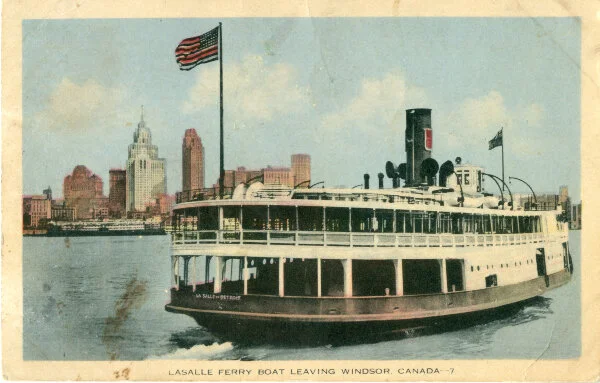
The LaSalle Ferry ran between Detroit and Windsor from 1922 to 1938.
Newspaper reports from the time say police suspected “marijuana” — the pejorative term for cannabis — was driving a rise in youth crime in Windsor and they wanted to stamp it out.
The bust was a big deal at the time.
A story on Page 12 of the Globe and Mail on Dec. 6, 1937 declared it “the largest seizure ever made of the drug here.”
RCMP also mentioned it in their year-end report dated March 31, 1938.
Charbonneau opted for a speedy trial by judge alone in Essex County Court, and 32 days after being arrested, on Jan. 5, 1938, he was found guilty by Judge JJ Coughlin. He was sentenced to two-years-less-a-day, plus a further indeterminate term of not more than one year, and fined $200. That’s equal to about $3,600 in 2020 dollars and Charbonneau was to be jailed for another month if he didn’t pay the fine.
That makes Charbonneau one of Canada’s first convicted cannabis smugglers.
Who was George Charbonneau?
We don’t have a lot of information but public records are able to paint a small picture.
Charbonneau was raised in a blue-collar, Francophone family in Windsor, Ont.
He was born Sept. 30, 1916, in Windsor, Ont. the oldest of six children (three sons and three daughters) to parents Louis and Mellina Charbonneau.
Copy of the 1921 Canadian census, which lists the Charbonneau family.
The family spoke French as their first language, but also spoke English, and George was listed as Roman Catholic on both the 1921 census and his court record.
His father, Louis, was a house painter and owned the modest brick home the family lived in on Dufferin Avenue in Windsor. Louis also passed away in 1932, when George was about 16 so it makes sense he might have wanted to earn extra money for the family during the Great Depression, but that is speculation.
Court records say Charbonneau (his name is spelled Charboneau on some reports) had an elementary school education and was working as a labourer when he was arrested.
At that time, he was living close to where he grew up, in a house on Bridge Avenue, about six kilometres from the Detroit-Windsor ferry dock.
Charbonneau would have had a supplier on the U.S. side as Cannabis doesn’t grow outdoors in the winter and indoor growing wasn’t yet a thing. Some police reports say officers suspected cannabis was being grown in Mexico and the southern U.S., and brought up to the northeast.
A quarter pound (4 ounces) of cannabis goes for around $600 today and he had a little more than that on him (5 1/8 ounces) when he was busted.
According to public records, Charbonneau joined the armed forces after his sentence and served in Second World War, along with brother Earl. George served with the Essex and Kent Scottish Regiment and was injured while overseas with the Canadian forces in Normandy.
He later married Hilda Fretwell and the couple had three children and six grandchildren.
Charbonneau passed away at his home in Tilbury, Ont. on May 31, 1987.
New record bust
The seizure of five ounces of cannabis was the largest ever in Canada at the time, but that record didn’t last for long.
Just 10 days after Charbonneau was jailed — on Jan. 15, 1938 — RCMP arrested 31-year-old William DeBozy, who they suspected was a main supplier of Cannabis to the Windsor area.
DeBozy, an American from Plymouth, Mi., and his girlfriend, Cora Arnold, from Detroit, were being tailed by narcotics officers in Windsor on that Saturday.
The couple was stopped in DeBozy’s car, a Ford Tudor, which he’d driven over the border. A police report says he worked for the Ford Motor Company at the time.
According to the 1938 League of Nations report, neither had drugs on them when they were stopped and searched, but police found a package of 25 cannabis cigarettes hidden under the dashboard.
DeBozy admitted the joints were his so he was arrested and Arnold was released without charge. A police officer escorted her back to Detroit.
Interestingly, police later learned Arnold had been jailed briefly for cannabis possession in Michigan, meaning she might not have been such an innocent bystander.
DeBozy’s car was taken to a garage to be searched and after using a large metal hook found on the backseat to open a hidden compartment in the trunk, police discovered eight tobacco tins filled with about 21 ounces of cannabis — a new record bust.
Police suspected DeBozy was growing cannabis on his farm near Plymouth, Mi. and he was one of the main suppliers to the Windsor area.
His lawyer, Gerald McHugh, argued it was for personal use and DeBozy had found the cannabis growing wild in a vacant lot near his home.
He told court he’d picked up the habit of smoking “reefers” while serving in the U.S. army in Panama.
DeBozy initially pleaded not guilty, but at a hearing on Jan. 24, 1938, he changed his plea to guilty and was sentenced to three years in Kingston Penitentiary plus a $200 fine (and another six months if he didn’t pay it).
His car was also confiscated.
In his mug shot, DeBozy is wearing a white dress shirt, dark jacket and a hat, and has a resigned look on his face.
Newspaper archives say one of his sisters shouted “Oh no!” when the sentence was read out in court and she had to be escorted from the room, sobbing, causing a short delay.
Interestingly, DeBozy was asked by Crown prosecutor Keith Laird — who also prosecuted Charbonneau — during the proceedings: “Are you aware that marihuana causes murderous intent in some people?”
To which he replied, “No, it never affects me that way.”
DeBozy died in Michigan in 1962 at the age of 55.
Earliest arrests linked to jazz musicians
The first arrests for cannabis in Canada, according to newspaper reports, happened on June 13, 1933 in Montreal, involving three musicians from the U.S. and a Canadian.
The musicians were part of a 15-piece orchestra at Frolics Cabaret, which operated at 1417 Saint-Laurent Blvd. from 1929 to 1933. The club was quite opulent in its day, with the owners investing $50,000 to convert a fur warehouse, which would be nearly $1 million today.
It was known for having silk tapestries on the walls, a large dance floor and and high-end lighting, attracting socialites, celebrities and gangsters from as far away as New York.
A months-long investigation had been launched into the suspected sale of “marijuana cigarettes” in Montreal, which eventually led to the cabaret.
On that Tuesday night, officers were surveilling the musicians and “shortly after midnight,” two of them, Sam Burman (it’s also spelled Burnham), 28, from Toledo, Ohio, and Charlie Walker, 25, from Savannah, Georgia, were followed to a rooming house on Crescent Street, not far away, where they were staying.
The two were arrested and a search of the room turned up a tobacco tin containing 150 cannabis cigarettes, which was seized.
Another musician, Joseph Banks, 29, from New York, and the only Canadian, Arthur Gravel, 24, arrived a few minutes later, and they were also arrested.
According to the 1931 census, Gravel was Francophone and had grown up in Montreal. He was single and lived in a rented apartment with his mother and 33-year-old sister and was listed as working as a clerk.
Another interesting tidbit from the census is that Gravel reported earnings of $480 in the previous 12 months.
Their bails were set at $3,000 each, which was an enormous sum at the time, especially during the Depression years, equivalent to about $70,000 in 2026.
Because drugs were prosecuted as a summary offence, there was no preliminary inquiry, instead the cases went to trial by judge and 10 days later, three of the four were convicted.
Burman, who is described in newspapers as a “negro cabaret entertainer” was jailed for six months and handed a $200 fine by Judge Victor Cusson.
The fact that “negro” and “colored” was the first, and sometimes only, descriptor of the musicians in almost every newspaper story is evidence of the coded language of the day.
Racism was less prevalent in Canada than the U.S., especially in Montreal, which was a larger centre than Toronto at the time, but it was still part of life.
Banks and Gravel were given similar sentences of six months in jail and a fine, while Walker was acquitted.
Walker being acquitted is somewhat surprising. My theory is he didn’t have any cannabis on him when he was arrested, so he couldn’t be tied to the tins.
Records also show the affects cannabis prosecutions had on people. In the census record before his arrest, Gravel’s occupation is listed as clerk, but later records list him as a day labourer.
In an unrelated move, two days after the arrests, Frolics Cabaret was rebranded as a jazz club called Connie’s Inn, largely the result of Prohibition having been ended in the U.S., meaning the number of American visitors was waning.
Another newspaper story says “mariajuana” (sic) was mainly used in the south but cigarettes with the drug were being found the year before in New York, and they had begun showing up ‘on the fringes of Montreal nightlife.’”
Another interesting fact is that two month earlier, in April 1933, Harry Davis, who was an original investor in Frolics Cabaret, was arrested after police found 850 kilograms of heroin hidden in a shipment of Japanese silk. Officers had been investigating suspected drug trafficking for nearly three years and the seizure was made after a gang member turned informant.
Davis was convicted in October 1933 of drug smuggling and bribing customs officers and was sentenced to 14 years in prison, along with 10 lashes. That makes him the first person in Canada to be sentenced to lashes for a drug offence.
Many earlier court documents and police files have been destroyed by fire over the years, and many of the available records only list ‘drugs,’ so we don’t know definitely they meant cannabis.