The History of Rolling Papers

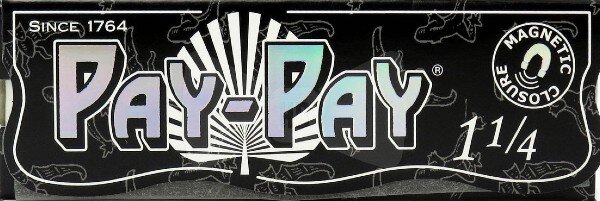
Pay-Pay 6 (1).jpg

by Dave Dormer

The saying, ‘If it ain’t broke don’t fix it’ rings especially true when it comes to rolling papers as they really haven’t changed much in several hundred years.

We don’t know exactly when people started rolling Cannabis into joints, but it was probably around the late 1400s, when tobacco, and smoking, were brought to Eurasia by explorers returning from North and South America. Until then, Cannabis was mainly consumed as an edible in the form of Hashish or Charas, but it was smoked using rudimentary pipes, bongs and braziers.

Paper was brought to the Islamic world in the 1100s.

One of the oldest rolling paper companies is Pay-Pay, which was formed in 1703 after Dominican monks figured rolling paper would be easier to use if it was cut to size and protected in a booklet.

Their first paper mill was then built in 1764 in Alcoy, Spain and the company began manufacturing.

Rolling paper was made thinner than newspaper of the day, which many poor people used to smoke tobacco because of high taxes placed on it.

Rolling paper was also much healthier as it didn’t have chemicals like lead and cadmium found in the newspaper ink.

Another of the oldest manufacturers still in operation is Rizla. According to its website, Pierre Lacroix was inspired to start making rolling papers after trading some high quality paper for a bottle of champagne in 1532 (a transaction they still have a receipt for). The family continued to refine the process and it was perfected for rolling papers in 1660.

That paper grew in popularity and in 1736, another member of the family, Francois Lacroix, purchased a mill and started the Lacroix Rolling Paper Company.

Sixty years later, in 1796, Napoleon granted the Lacroix company a licence to produce rolling papers for his troops.

The Lacroix Rolling Paper Company continued to refine their process, and in 1865, began using rice as the base. One year later the name was changed to reflect the new product and Rizla was born — combining Riz, the French word for rice, and La, for Lacroix — which is still in operation today, but no longer owned by the Lacroix family.

Rizla was also one of the first to add flavour to rolling papers, menthol and strawberry, in 1906.

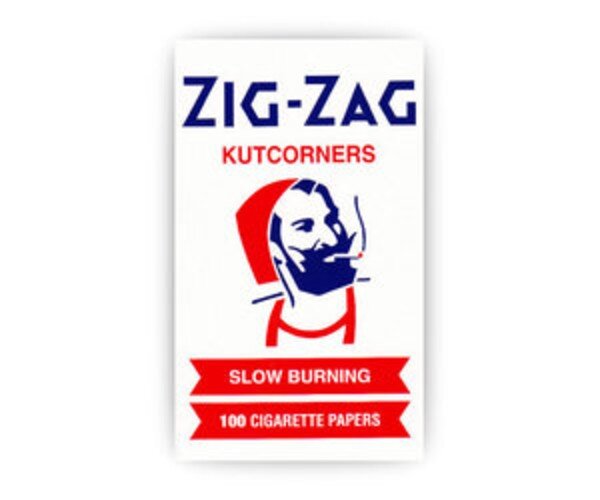
Zig-Zag is another iconic brand of rolling papers, which has an immediately recognizable logo.

Zig Zag.jpg

According to the company’s website, the inspiration came from the Battle of Sevastopol in the mid-1800s, where a French North African soldier, known as a Zouave, tore a strip of paper from his gunpowder bag after his clay pipe was smashed by a bullet.

Then in 1884, Maurice and Jacques Braunstein patented a process that quickly became the industry standard, allowing rolling papers to be interwoven and dispensed one at a time, in a zig-zag pattern, which is where the name comes from.

Apart from the addition of flavours and gum, rolling papers really haven’t changed much since the 1700s. At first, they were produced in sheets, which had to be folded and torn to size.

That led to booklets being created when manufacturing began in the 1700s, which were made into the 1 1/4 (78mm) size we still have today, also known as Spanish size.

The name 1 1/4 comes from the fact Spanish-sized rolling papers held 25% more tobacco than the standard British size, which were 70mm and became popular due to the high tax added to tobacco.

It was in the late 1800s that Pay-Pay began adding a line of gum Arabic to one edge, creating the rolling paper we know today.

Another advent came in the last 10 years, by Raw founder Josh Kesselman. As explained in this article, Kesselman noticed that watermarks — added as a form of branding — affected how the paper burned.

That led him to experimenting with various patterns to make it burn more consistently, with the energy being directed inward..

Today Raw has grown into one of the largest and best-known rolling paper manufacturers in the world, along with other recent upstarts like Elements and King Palm.

The Discovery of THC

Dr. Raphael Mechoulam

Dr. Raphael Mechoulam

People have been getting stoned off Cannabis for thousands of years, but it’s only been the last half century that we’ve understood why.

It was in 1964 at the Weizmann Institute of Science in Rehovot, Israel that Dr. Raphael Mechoulam, along with colleagues Dr. Yehiel Gaoni and Dr. Haviv Edery, first isolated delta-9-tetrahydrocannabinol, which we know as THC.

This began our journey of understanding of the mechanisms behind how and why we get high when we consume decarboxylated Cannabis — which continues today — and led to the discovery of cannabinoid receptors in the human brain and the endocannabinoid system in the human body.

Mechoulam and his colleagues also isolated several more of the 113 cannabinoids that have been found so far, including CBD.

In a 2011 interview with High Times Magazine, Mechoulam said that Cannabis wasn’t well known in the U.S. at the time, mostly being used by jazz musicians. We know this wasn’t entirely accurate, though, as Cannabis was being used in most states and the underground industry was growing.

Because it was illegal in many countries by the 1960s, there was little research being done on the plant. As an organic chemist, Mechoulam was interested in biological activity and it was the lack of knowledge or ongoing research that drew him to Cannabis.

He had asked for a research grant from the American-based National Institute of Health (NIH), which turned him down. But they became interested after Mechoulam managed to isolate 10 grams of THC from hashish.

Despite Cannabis being illegal in Isreal, Mechoulam said they were able to do research as the government understood they weren’t selling it on the side. As we say so often, it was a different time back then.

Why the NIH suddenly got involved is also an interesting story, as told to High Times by Mechoulam:

“Yeah, well, they [NIH] didn’t have a single grant on cannabis at that time, but the National Institute of Mental Health did, I think. As I said earlier, the NIH wrote me that they don’t want to, they won’t give me money, because it’s not interesting or relevant. And then, all of a sudden, I get a phone call from the head of pharmacology at NIH, and they’re now interested. So I asked him: “What happened, all of a sudden, that you have great interest?” Well, it turned out that a senator had called NIH – his son smoked pot, and he wanted to know whether it would destroy his mind!

And just like that, the government got NIH to change direction. They don’t want to fight the senators because they need their support, and they looked around and [said] “Aha!” – they don’t support grants on marijuana, so they asked me if I was still working. We had just isolated THC, and that was it.”

Along with illegality, our lack of knowledge also came from the fact isolating THC was not an easy thing to do, as Mechoulam explained to High Times:

See, morphine and cocaine are so-called alkaloids, namely a natural product that contains a nitrogen [atom] on the molecule, and it can give us salt; it precipitates as a salt. And so you have salt: Cocaine is a salt, morphine is a salt – very easy to prepare. It turned out that THC does not have a nitrogen, and it is present in a mixture of compounds – we know that there are about 60 of them now. And they didn’t have the techniques to isolate them in the past. So a few people tried here and there, actually some very good people – one of them [Lord Alexander Todd] got the Nobel Prize for something else. But they never succeeded in isolating the pure substance, and so they never knew whether they had one compound or many compounds, and so on.

Our understanding of THC has grown since that initial breakthrough. We now know there are CB1 and CB2 receptors in our bodies and brains, and that THC binds to these, giving us euphoric effects.

We also now know that when we smoke Cannabis, it becomes decarboxylated and the delta-9-THC molecules are carried from our lungs to our brains via capillaries. But when we eat decarboxylated Cannabis, our livers break the delta-9-THC molecule down, creating the metabolite 11-OH-THC, which is believed to be one of the reasons why edibles last much longer and are stronger than flower.

Another positive that will come from legalization is the fact it makes research easier to undertake, which will expand our understanding further.

To hear Mechoulam tell the story himself, watch this brilliant documentary:

The History of Bongs

"Hits From The Bong" by Cypress HillListen to Cypress Hill: https://CypressHill.lnk.to/listenYDSubscribe to the official Cypress Hill YouTube channel: https:...

Pick it, pack it, fire it up, come along, and take a hit from the bong
Put the blunt down, just for a second, don’t get me wrong, it’s not a new method

There's a lot of truth in Cypress Hill's hit song, Hits From the Bong.

The water does smell like shit on the carpet if you spill it; it does go down smooth when you get a clean hit; and bongs are most definitely not a new method.

They’ve been a staple in dorm rooms and head shops since the 1970s, but the use of bongs dates back much further than that. Thousands of years, in fact.

A bong — also known as a bubbler or a water pipe — has a chamber, that’s usually partially filled with water, with a stem (where you put the Cannabis) and a tube or mouthpiece to draw smoke from.

Just about anything can be made into a bong, from an apple to a milk jug, and advances in manufacturing mean they’re becoming more and more ornate, with multiple chambers.

Drawing smoke through water is thought to cool it down and filter out some of the plant material and tar, but studies show it also filters out some of the cannabinoids.

Our understanding of the history of bongs has only really come into focus in the last decade. Until recently, it was believed bongs were first used in Africa starting in the 1100s by tribes in the southern and eastern parts of the continent, as those were the oldest examples found.

Bongs were then carried into Asia, and throughout the rest of the known world via the Silk Road starting around the 1400s, with the advent of smoking.

But our knowledge was expanded in 2013 with the discovery of a 2,400-year-old kurgan — a Scythian burial mound — in what is today southern Russia.

Inside were two ornate, solid gold bongs dating to around 400BC — about 1,500 years earlier than the earliest bongs discovered in Africa. Residue from inside the ancient Scythian relics tested positive for both Cannabis and opium, a combination that’s known as an A-Bomb today.

You can read more about the discovery and see photos in a National Geographic article here.

As recounted by the Greek historian Herodotus in his work The Histories around 430BC, the Scythian consumed Cannabis as a way of communing with the spirit world, and subsequent discoveries suggest Cannabis was consumed regularly by both men and women.

Life would have been tough as a marauding warrior around the fourth century BC, so it’s not surprising they used it to find pleasure and relaxation.

Ancient Scythian artisans obviously didn’t craft the first bongs out of solid gold. They likely evolved from handheld wooden and clay braziers — small carved or moulded containers that could be filled with cannabis, then hot stones or pebbles would be placed on top and the smoke and vapour inhaled.

Scythian culture has strong ties to the history of Cannabis. As is explained in a previous post, their word for it — Kanab — is widely considered the origin of the word Cannabis.

The Scythian were also responsible for spreading Cannabis use across what is today Europe, the Middle East and North Africa. They brought it to Greece (where we get the word Kannabis), and some ancient Arabic scholars said it was brought to the Levant countries around 1100 by mongol invaders.

It makes sense then that Cannabis and the use of bongs would have been carried into Egypt, and then spread further south to places like modern-day Ethiopia around that time.

The English word, ‘bong’ comes from the Thai word 'baung’ which dates to around the 14th century and means a tube, usually made from bamboo, that’s used to smoke Cannabis or tobacco. The Thai word might itself come from the Bong’om tribe in Africa.

The earliest written use of the English word ‘bong’ was in a 1944 Thai-English dictionary by George Bradley McFarland, so it’s plausible the word could have been brought to North America by soldiers returning from the Pacific theatre during the Second World War.

Bongs became popularized in North America in the 1960s and 70s with the growth of plastic, acrylic and glass manufacturing and by soldiers returning from Vietnam.

Canada's first Cannabis dealers

William DeBozy.

William DeBozy, an American who was arrested in January 1938 in Windsor, and later sentenced to three years jail.

by Dave Dormer

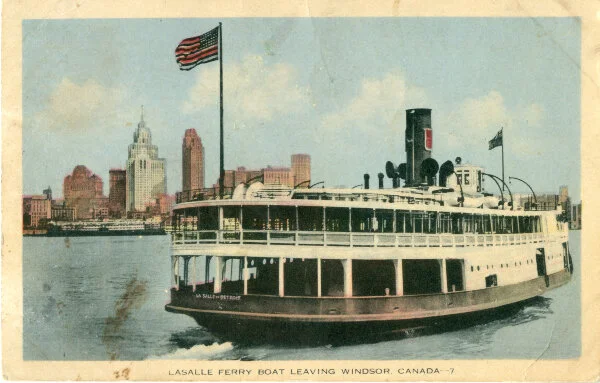
George Charbonneau likely had no idea RCMP Sgt. Ted Weeks was waiting for him when he boarded the LaSalle Ferry on Dec. 4, 1937 for the 15-minute return trip from Detroit to Windsor, Ont.

In the pockets of his overcoat on that chilly Saturday, the 21-year-old Canadian was carrying just over five ounces of ground cannabis hidden in two tobacco tins.

Reefer Madness was ramping up as cannabis had been made illegal in the U.S. two months earlier (14 years after it was made illegal in Canada) and enforcement was increasing on both sides of the border.

According to a 1938 League of Nations report on illicit transactions and seizures of drugs, RCMP suspected Charbonneau of trafficking cannabis and Weeks, along with Const. Robinson of the Windsor detachment, were waiting to search him when he arrived at the dock.

LaSalle Ferry Windsor-Detroit 2.jpg

The LaSalle Ferry ran between Detroit and Windsor from 1922 to 1938.

Newspaper reports from the time say police suspected “marijuana” — the pejorative term for cannabis — was driving a rise in youth crime in Windsor and they wanted to stamp it out.

The bust was a big deal at the time.

A story on Page 12 of the Globe and Mail on Dec. 6, 1937 declared it “the largest seizure ever made of the drug here.”

RCMP also mentioned it in their year-end report dated March 31, 1938.

Charbonneau opted for a speedy trial by judge alone in Essex County Court, and 32 days after being arrested, on Jan. 5, 1938, he was found guilty by Judge JJ Coughlin. He was sentenced to two-years-less-a-day, plus a further indeterminate term of not more than one year, and fined $200. That’s equal to about $3,600 in 2020 dollars and Charbonneau was to be jailed for another month if he didn’t pay the fine.

That makes Charbonneau one of Canada’s first convicted cannabis smugglers.

Who was George Charbonneau?

We don’t have a lot of information but public records are able to paint a small picture.

Charbonneau was raised in a blue-collar, Francophone family in Windsor, Ont.

He was born Sept. 30, 1916, in Windsor, Ont. the oldest of six children (three sons and three daughters) to parents Louis and Mellina Charbonneau.

Copy of the 1921 Canadian census, which lists the Charbonneau family.

The family spoke French as their first language, but also spoke English, and George was listed as Roman Catholic on both the 1921 census and his court record.

His father, Louis, was a house painter and owned the modest brick home the family lived in on Dufferin Avenue in Windsor. Louis also passed away in 1932, when George was about 16 so it makes sense he might have wanted to earn extra money for the family during the Great Depression, but that is speculation.

Court records say Charbonneau (his name is spelled Charboneau on some reports) had an elementary school education and was working as a labourer when he was arrested.

At that time, he was living close to where he grew up, in a house on Bridge Avenue, about six kilometres from the Detroit-Windsor ferry dock.

Charbonneau would have had a supplier on the U.S. side as Cannabis doesn’t grow outdoors in the winter and indoor growing wasn’t yet a thing. Some police reports say officers suspected cannabis was being grown in Mexico and the southern U.S., and brought up to the northeast.

A quarter pound (4 ounces) of cannabis goes for around $600 today and he had a little more than that on him (5 1/8 ounces) when he was busted.

According to public records, Charbonneau joined the armed forces after his sentence and served in Second World War, along with brother Earl. George served with the Essex and Kent Scottish Regiment and was injured while overseas with the Canadian forces in Normandy.

He later married Hilda Fretwell and the couple had three children and six grandchildren.

Charbonneau passed away at his home in Tilbury, Ont. on May 31, 1987.

New record bust

The seizure of five ounces of cannabis was the largest ever in Canada at the time, but that record didn’t last for long.

Just 10 days after Charbonneau was jailed — on Jan. 15, 1938 — RCMP arrested 31-year-old William DeBozy, who they suspected was a main supplier of Cannabis to the Windsor area.

DeBozy, an American from Plymouth, Mi., and his girlfriend, Cora Arnold, from Detroit, were being tailed by narcotics officers in Windsor on that Saturday.

The couple was stopped in DeBozy’s car, a Ford Tudor, which he’d driven over the border. A police report says he worked for the Ford Motor Company at the time.

According to the 1938 League of Nations report, neither had drugs on them when they were stopped and searched, but police found a package of 25 cannabis cigarettes hidden under the dashboard.

DeBozy admitted the joints were his so he was arrested and Arnold was released without charge. A police officer escorted her back to Detroit.

Interestingly, police later learned Arnold had been jailed briefly for cannabis possession in Michigan, meaning she might not have been such an innocent bystander.

DeBozy’s car was taken to a garage to be searched and after using a large metal hook found on the backseat to open a hidden compartment in the trunk, police discovered eight tobacco tins filled with about 21 ounces of cannabis — a new record bust.

Police suspected DeBozy was growing cannabis on his farm near Plymouth, Mi. and he was one of the main suppliers to the Windsor area.

His lawyer, Gerald McHugh, argued it was for personal use and DeBozy had found the cannabis growing wild in a vacant lot near his home.

He told court he’d picked up the habit of smoking “reefers” while serving in the U.S. army in Panama.

DeBozy initially pleaded not guilty, but at a hearing on Jan. 24, 1938, he changed his plea to guilty and was sentenced to three years in Kingston Penitentiary plus a $200 fine (and another six months if he didn’t pay it).

His car was also confiscated.

In his mug shot, DeBozy is wearing a white dress shirt, dark jacket and a hat, and has a resigned look on his face.

Newspaper archives say one of his sisters shouted “Oh no!” when the sentence was read out in court and she had to be escorted from the room, sobbing, causing a short delay.

Interestingly, DeBozy was asked by Crown prosecutor Keith Laird — who also prosecuted Charbonneau — during the proceedings: “Are you aware that marihuana causes murderous intent in some people?”

To which he replied, “No, it never affects me that way.”

DeBozy died in Michigan in 1962 at the age of 55.

Earliest arrests linked to jazz musicians

The first arrests for cannabis in Canada, according to newspaper reports, happened on June 13, 1933 in Montreal, involving three musicians from the U.S. and a Canadian.

The musicians were part of a 15-piece orchestra at Frolics Cabaret, which operated at 1417 Saint-Laurent Blvd. from 1929 to 1933. The club was quite opulent in its day, with the owners investing $50,000 to convert a fur warehouse, which would be nearly $1 million today.

It was known for having silk tapestries on the walls, a large dance floor and and high-end lighting, attracting socialites, celebrities and gangsters from as far away as New York.

A months-long investigation had been launched into the suspected sale of “marijuana cigarettes” in Montreal, which eventually led to the cabaret.

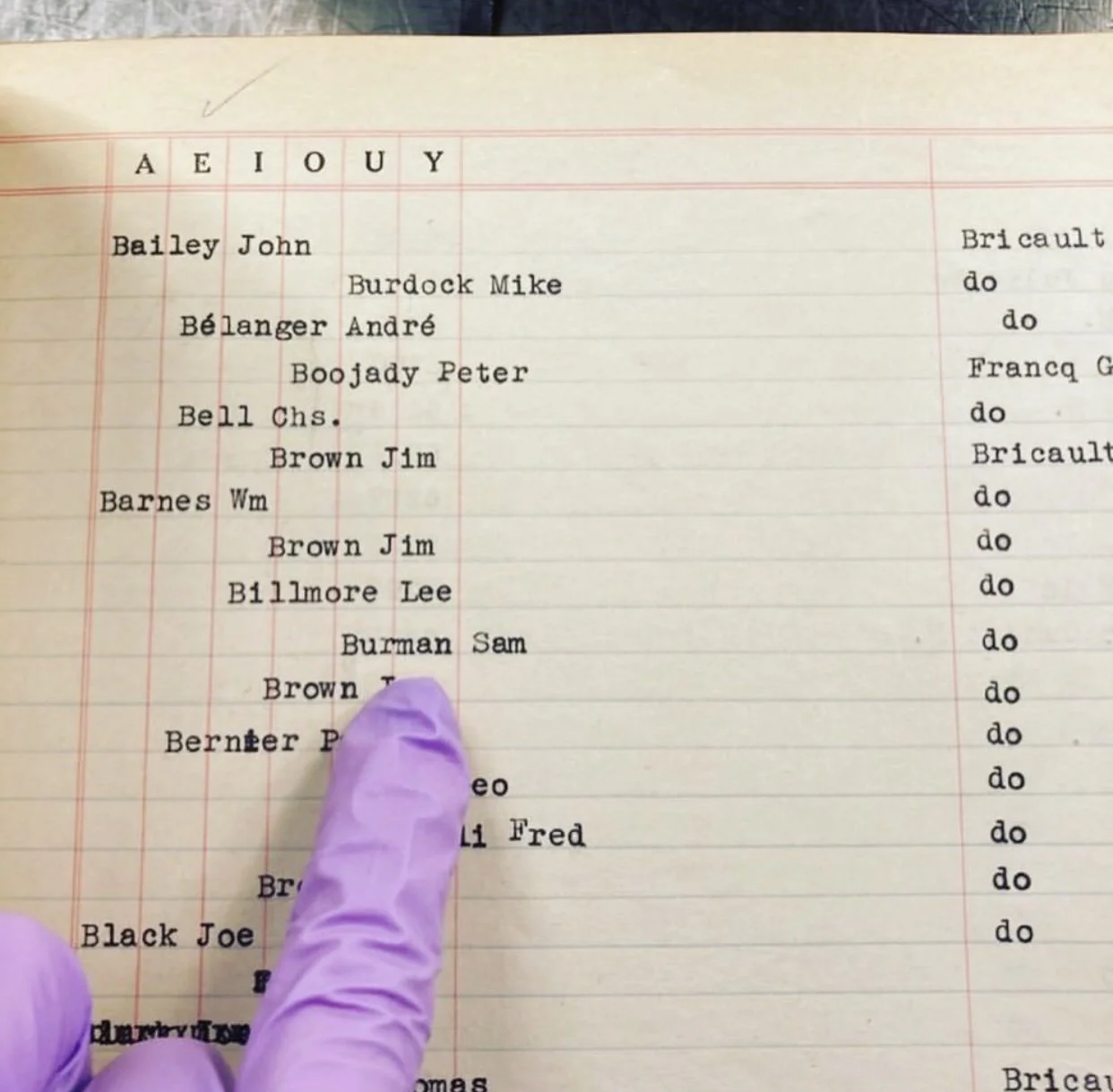
On that Tuesday night, officers were surveilling the musicians and “shortly after midnight,” two of them, Sam Burman (it’s also spelled Burnham), 28, from Toledo, Ohio, and Charlie Walker, 25, from Savannah, Georgia, were followed to a rooming house on Crescent Street, not far away, where they were staying.

The two were arrested and a search of the room turned up a tobacco tin containing 150 cannabis cigarettes, which was seized.

Another musician, Joseph Banks, 29, from New York, and the only Canadian, Arthur Gravel, 24, arrived a few minutes later, and they were also arrested.

According to the 1931 census, Gravel was Francophone and had grown up in Montreal. He was single and lived in a rented apartment with his mother and 33-year-old sister and was listed as working as a clerk.

Another interesting tidbit from the census is that Gravel reported earnings of $480 in the previous 12 months.

Their bails were set at $3,000 each, which was an enormous sum at the time, especially during the Depression years, equivalent to about $70,000 in 2026.

Because drugs were prosecuted as a summary offence, there was no preliminary inquiry, instead the cases went to trial by judge and 10 days later, three of the four were convicted.

Burman, who is described in newspapers as a “negro cabaret entertainer” was jailed for six months and handed a $200 fine by Judge Victor Cusson.

The fact that “negro” and “colored” was the first, and sometimes only, descriptor of the musicians in almost every newspaper story is evidence of the coded language of the day.

Racism was less prevalent in Canada than the U.S., especially in Montreal, which was a larger centre than Toronto at the time, but it was still part of life.

Banks and Gravel were given similar sentences of six months in jail and a fine, while Walker was acquitted.

Walker being acquitted is somewhat surprising. My theory is he didn’t have any cannabis on him when he was arrested, so he couldn’t be tied to the tins.

Records also show the affects cannabis prosecutions had on people. In the census record before his arrest, Gravel’s occupation is listed as clerk, but later records list him as a day labourer.

In an unrelated move, two days after the arrests, Frolics Cabaret was rebranded as a jazz club called Connie’s Inn, largely the result of Prohibition having been ended in the U.S., meaning the number of American visitors was waning.

Another newspaper story says “mariajuana” (sic) was mainly used in the south but cigarettes with the drug were being found the year before in New York, and they had begun showing up ‘on the fringes of Montreal nightlife.’”

Another interesting fact is that two month earlier, in April 1933, Harry Davis, who was an original investor in Frolics Cabaret, was arrested after police found 850 kilograms of heroin hidden in a shipment of Japanese silk. Officers had been investigating suspected drug trafficking for nearly three years and the seizure was made after a gang member turned informant.

Davis was convicted in October 1933 of drug smuggling and bribing customs officers and was sentenced to 14 years in prison, along with 10 lashes. That makes him the first person in Canada to be sentenced to lashes for a drug offence.

Many earlier court documents and police files have been destroyed by fire over the years, and many of the available records only list ‘drugs,’ so we don’t know definitely they meant cannabis.

Where some Cannabis slang comes from

Did you know we call good Cannabis Chronic because of Snoop Dogg‘s confusion as a teenager.

Yes, the Snoop Dogg.

He tells the story to Seth Rogen starting at the 10-minute mark below:

The hilarious Seth Rogen joins us to talk about his current and upcoming projects. He also shows us how to roll the perfect cross joint while Snoop reveals t...

Basically when Snoop and his friends first smoked hydroponic weed, they got so baked they misheard/remembered hydro-ponic as hydro-chronic.

They kept calling it that and eventually used it as the title of Dr. Dre’s first album, The Chronic, in 1992, putting it into the mainstream.

A lot of Cannabis slang has an interesting back story.

Take the term 4:20.

Even your grandma knows what it means when someone says 4:20.

But where does it come from?

Back in 1971, a group of five high schoolers in San Rafael, Calif. got tipped off to an outdoor grow they could harvest if they could find, so they made a code for meeting up and discussing the plan.

“4:20 Louis” they’d say, then meet after classes at the Louis Pasteur statue in front of their school.

The Louis Pasteur statue in front of San Rafael High School.

They didn’t find the weed but kept using the code to meet and smoke and eventually the ‘Louis’ part got dropped as they’d meet other places too.

One of the group later became a roadie for a member of the Grateful Dead, who was also from San Rafael. They used 4:20 on some of their flyers for shows, which spread it among Deadheads, and eventually it was picked up by High Times in an article about Cannabis slang and terminology, spreading it to the mainstream.

Some Cannabis slang is fairly straight forward.

We call them “dabs” because you dab a concentrate onto heat to take a hit.

Same with the word “concentrates,” THC and other terpenes are concentrated together, making it stronger than smoking regular flower.

Distillates are distilled.

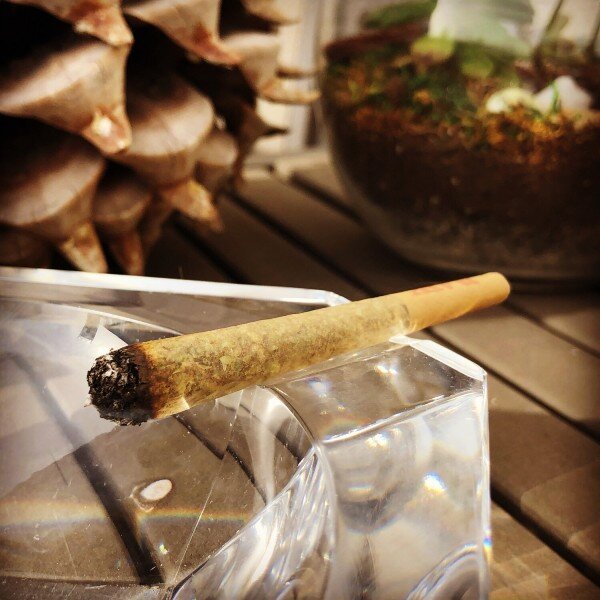
joint.jpg

Other words aren’t as straight forward. Take joint for example.

If I ask you to roll a joint, you’d know what I mean, but why do we call it that?

The first use of the word to refer to a Cannabis cigarette was in a 1938 New Yorker article by Meyer Berger titled Tea for a Viper, which also gave us the term roach for the leftover nub of a joint.

Of course, words will be in use long before they’re first written down.

The word joint had been used since the early 1800s to mean a place where nefarious activities happen, like a bar or an opium den.

The roots of that can be traced back to the French word, Joindre, which means to join or bring together (illegal bars and opium dens were usually side rooms joined to the main one).

A blunt is when you use a cigar paper to roll a joint (and they usually have tobacco added). The name comes from New York, where Phillies Blunt cigars were first used, with blunt referring to the size.

Another word with a fuzzy origin is doobie.

Some say it comes from a popular character on the show Romper Room during the 1950s and 60s, Mr. Do Bee. Others would argue it’s linked to the character Dobie Gillis, who was reportedly the inspiration for Shaggy in The Adventures of Scooby Doo.

Maybe it was a combination of both.

And joints are called spliffs in Jamaica and the West Indies. That’s a blending of the word split, which is a rolling paper, and whiff, which refers to the pungent smell of Ganja when it’s smoked.

Why Cannabis was legalized in Canada

cannabis2.jpg

The fight to legalize Cannabis in Canada took nearly a century.

We told you in a previous post about how it was made illegal in April 1923 with a simple announcement in the House of Commons that a “new drug” had been added to Bill 72.

Undoing that took 95 years of protests, marches, demonstrations, debates, speeches, smoke-ins, smoke-ups, lawsuits and civil disobedience.

After 34,876 days, Cannabis became legal on Oct. 17. 2018.

So what took so long?

Cannabis wasn’t a well-known drug In Canada in the early 1920s. Farmers would have been familiar with Hemp, but not a lot of people would have known about smoking Cannabis and Hashish.

It would have been known more as a medicine than a recreational drug and cultural references weren’t always entirely accurate.

But just as the first laws against Cannabis in the 1300s didn’t stop people from using it, neither did making it illegal in Canada in 1923.

Use slowly spread and by 1933, newspapers were reporting on people being arrested and sentenced to six months in jail for possession of as little as two Cannabis joints.

It continued to exist largely as an underground drug throughout the 1930s, ‘40s and ‘50s, as records say there was only a “handful” of arrests in Canada during that time, one of the largest being two tins of tobacco filled with Cannabis (just over five ounces) that was seized in 1937. Another was about 20 ounces, or just over a pound, seized a few weeks later, not massive quantities but at the time the busts made national headlines.

It wasn’t until the 1960s that use really exploded, especially among younger people and the middle class. That also led to a big increase in the number of arrests for simple possession.

In response, the Canadian government launched the Le Dain Commission in 1969, which at the time was one of the most comprehensive inquiries into the use of non-medical drugs.

It concluded Cannabis was generally a benign drug that should be regulated but simple possession and cultivation should be legalized, or at least decriminalized.

The Liberal prime minister at the time, Pierre Elliott Trudeau, accepted the reports but his government didn’t implement the proposed legislative changes.

A fine of $1,000 had been added as a sentencing option in 1969, and by 1971, that’s how most cases were resolved.

It was in the 1970s that hydroponic cultivation began, which created the black market as we know it today and made Cannabis much more readily available.

As the Cannabis industry grew in the 1980s, so did efforts to legalize it, along with government efforts to crack down.

Most cases of simple possession continued to be resolved with a fine, but that also meant people were pleading guilty to a criminal offence.

The resulting criminal record could make travel and having a career difficult.

That led to diversion programs as a sentencing option being created in the 1990s, which allowed people to plead guilty and enter treatment or do community service and avoid receiving a criminal record.

But arrests continued, and one in particular would change things dramatically.

Terry Parker had used Cannabis since he was a teenager as a way of controlling seizures. He was arrested in 1987 and charged with possession, but his doctor wrote letters to the court and he was acquitted by reason of medical necessity.

Then on July 18, 1996, Parker, at the age of 43, was arrested once again and charged with possession, distribution and trafficking of Cannabis.

He appealed to the Ontario Supreme Court, arguing his Constitutional rights were being violated because he didn’t have legal access to medical Cannabis.

In 2000 the court sided with Parker and declared the prohibition on possession to be invalid.

In his written ruling, Justice Marc Rosenberg also recognized that would leave a gap in the existing legislation, so he gave the federal government one year to change the law and take medical users into account.

In response, the federal government created the Marijuana for Medical Purposes Regulations in 2001, which was the first medical marijuana system.

That made it legal for patients to possess Cannabis but didn’t provide them with a legal supply, leading to charges being thrown out of court by 2003, so the federal government again looked to change the legislation.

A Bill was also introduced that would have decriminalized possession of less than 15 grams of Cannabis or 1 gram of Hashish — instead making it a $400 fine. But despite wide-spread public support, it was never enacted into law.

Then in 2006, Canada elected a Conservative government led by Stephen Harper, which brought in tougher penalties and sentencing guidelines for drug offences.

Efforts to legalize Cannabis continued however, which ramped up further with the election of the Liberals led by Justin Trudeau — Pierre Elliott Trudeau’s son — in the 2015 federal election.

Cannabis had become fairly normalized in pop culture and a 2016 national poll found 70% of Canadians were in favour of legalization.

In April 2017, the Liberals tabled Bill C-45 and on Oct.17, 2018, Cannabis became legal in Canada.